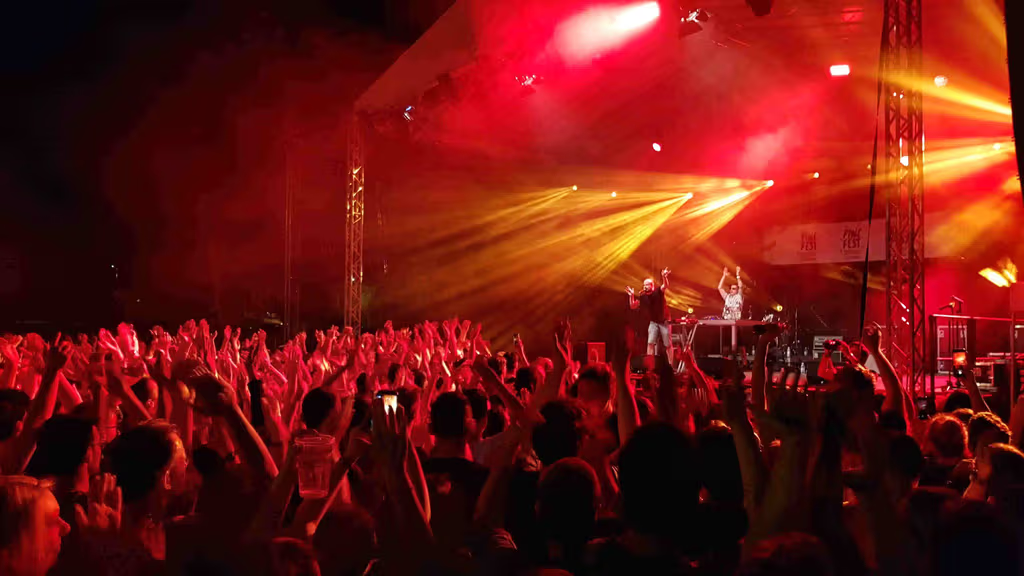
Something shifted at Coachella 2026. Not subtly, not gradually – the shift was loud, bass-heavy, and impossible to ignore. For the first time in the festival’s history, electronic acts didn’t just fill side stages or warm up headliner slots. They dominated them. From Friday night through Sunday’s closing set, the Coachella Valley Music and Arts Festival had effectively become one of the world’s most-watched EDM events.
That’s not a complaint. It’s a data point – and it has consequences that go well beyond festival season.
How Did We Get Here?
The story of EDM’s rise at Coachella is also the story of a generation raised on streaming. Gen Z didn’t discover electronic music through clubs or radio. They found it through YouTube algorithms, TikTok sounds, and Spotify autoplay. By the time today’s 19-year-olds were forming their musical identities, a four-on-the-floor kick drum and a melodic drop were just as natural as a guitar riff or a piano chord.
The booking decisions at Coachella 2026 reflected that reality. Lineups are ultimately a demand signal, and demand – judged by streaming numbers, social engagement, and ticket sales – pointed overwhelmingly toward electronic artists.
The Ripple Effect on Music Learning
Here’s where it gets interesting for anyone paying attention to music education. A report by Wiingy, a music tutoring platform – The DJ Takeover: How Coachella 2026 Became an EDM Festival, And What That Means for Music School – found that searches for DJ skills, music production, and beat-making have surged sharply among Americans under 25.
For years, guitar and piano dominated the conversation about what instruments young people wanted to learn. That duopoly is being challenged – not replaced, but genuinely challenged – by a generation that sees a laptop and a DAW as legitimate instruments.
The numbers support it. Interest in learning to produce electronic music has grown faster than almost any other music skill category over the past three years. When a genre takes over the biggest stages in the world, aspiring musicians notice. They want to do what the headliners do.
What Coachella Signals for Music Schools
Traditional music schools and tutoring platforms face a real question: are their curricula keeping pace with what students actually want to learn? A teenager watching a festival livestream isn’t dreaming of a classical conservatory. They’re watching someone trigger samples, layer synths, and build a crowd into a frenzy with software – and thinking: I could learn that.
The institutions that recognize this shift are already adapting. Online music tutoring has expanded rapidly into production, sound design, and DJ technique. The barrier to entry is low – a laptop, a pair of headphones, and a decent DAW subscription is all someone needs to start. That accessibility is part of why the interest is exploding.
The Genre War Is Over
There used to be a cultural debate about whether electronic music was “real” music. That debate is settled. When acts in the EDM and electronic space command the largest stages at the most-watched music festival in North America, the genre has earned its place in the canon – and in any serious conversation about music education.
Coachella 2026 didn’t just deliver great performances. It delivered a message to every music student, teacher, and institution paying attention: the sounds shaping a generation deserve to be taught, studied, and taken seriously.
The DJ takeover isn’t coming. It already happened. The question now is whether music education catches up.
